An issue of the Society’s newsletter, transcribed from the original. Download as PDF.
(9 pages, 4110 KB)
Page 1
1 Canadian Society for Creative Leathercraft
CANADIAN LEATHERCRAFT
Volume LVI No. 4 Summer 2008 0045-5121
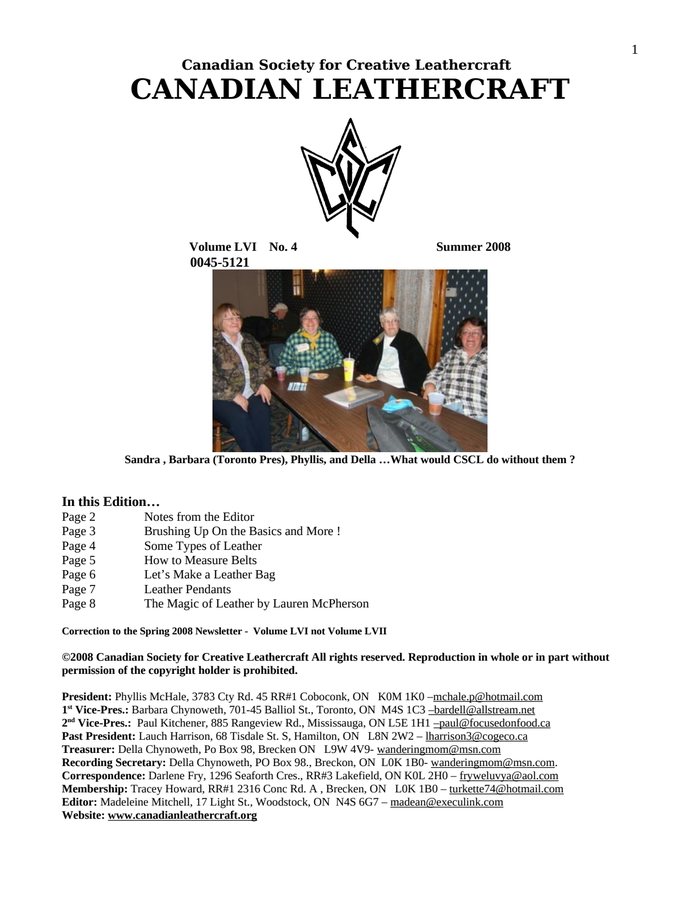
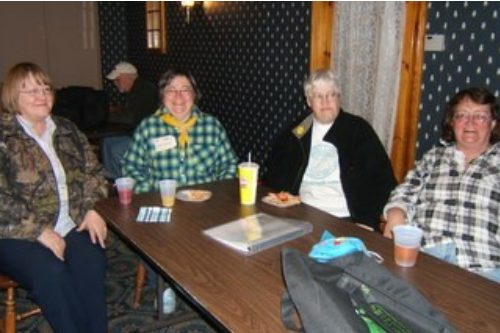
Sandra, Barbara (Toronto Pres), Phyllis, and Della …What would CSCL do without them?
In this Edition…
Page 2 Notes from the Editor
Page 3 Brushing Up On the Basics and More!
Page 4 Some Types of Leather
Page 5 How to Measure Belts
Page 6 Let’s Make a Leather Bag
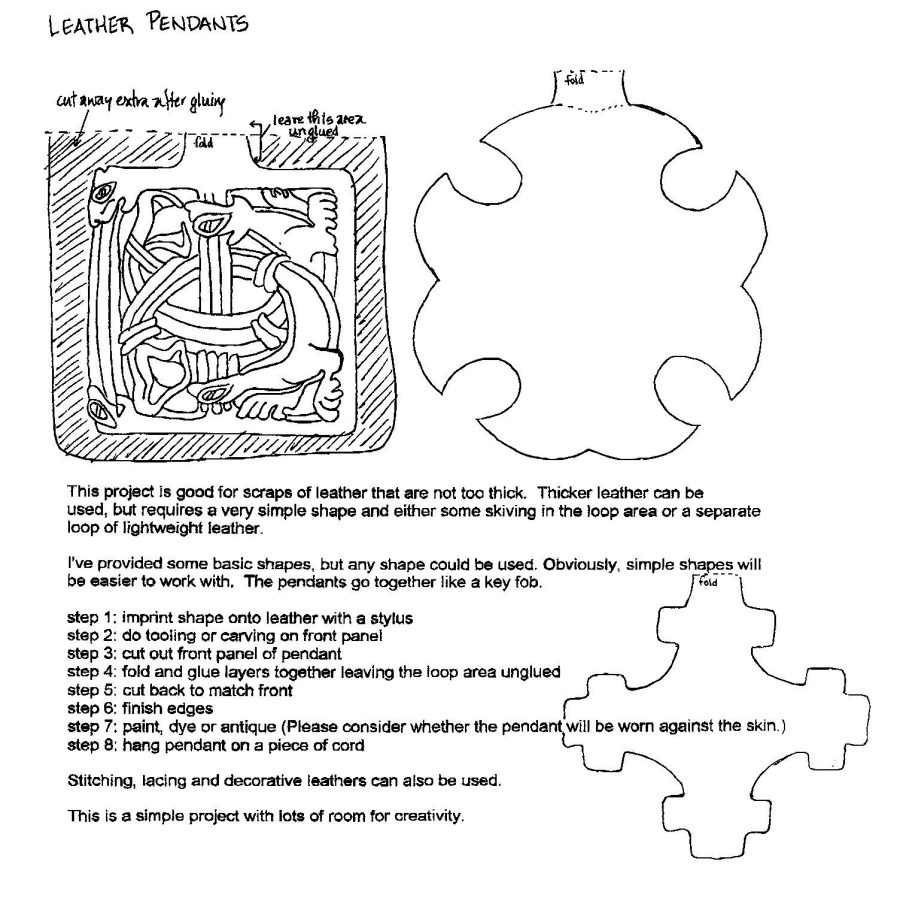
Page 7 Leather Pendants
Page 8 The Magic of Leather by Lauren McPherson
Correction to the Spring 2008 Newsletter - Volume LVI not Volume LVII
©2008 Canadian Society for Creative Leathercraft All rights reserved. Reproduction in whole or in part without permission of the copyright holder is prohibited.
President: Phyllis McHale, 3783 Cty Rd. 45 RR#1 Coboconk, ON K0M 1K0 –[email protected]
1st Vice-Pres.: Barbara Chynoweth, 701-45 Balliol St., Toronto, ON M4S 1C3 –[email protected]
2nd Vice-Pres.: Paul Kitchener, 885 Rangeview Rd., Mississauga, ON L5E 1H1 –[email protected]
Past President: Lauch Harrison, 68 Tisdale St. S, Hamilton, ON L8N 2W2 – [email protected]
Treasurer: Della Chynoweth, Po Box 98, Brecken ON L9W 4V9- [email protected]
Recording Secretary: Della Chynoweth, PO Box 98., Breckon, ON L0K 1B0- [email protected].
Correspondence: Darlene Fry, 1296 Seaforth Cres., RR#3 Lakefield, ON K0L 2H0 – [email protected]
Membership: Tracey Howard, RR#1 2316 Conc Rd. A, Brecken, ON L0K 1B0 – [email protected]
Editor: Madeleine Mitchell, 17 Light St., Woodstock, ON N4S 6G7 – [email protected]
Website: www.canadianleathercraft.org
Page 2
2
Notes from the Editor…
August 2008 will be remembered as the year the world went to Beijing China for the
Olympics –“One World One Dream”.
With an astounding opening, filled with fireworks, colourful costumes, children, and amazing precision, China recounted four of the great Chinese inventions – Gunpowder, paper, printing and the compass. As I write today, the Olympics are in the midst of the challenges – with Canada just today acquiring a Gold Medal in Rowing! I was curious about leathercraft in China
I found the following on a site that guides Beijing Tourists to shopping spots. This one is for Leathercraft:
“This shop is a Chinese shop specializing in handmade leather items near Back Lake area.
Beyond the narrow entrance door, a leather smell guides you to a clean sales spot under floor.
The merchandise is mainly shown on two sides: satchels and handbags on left side, tiny handicrafts such as wallets, purses, cell phone and key skins, and cup holders on the right wall. A few new arrivals stand on the central shelves.
Mrs. He, the shop owner, is very proud of her shop, saying all the products created by Samghrma are unique. Literally, there is only one copy of each product in stock.
Browsing through the displays, I noticed that the patterns used on the leather are simple: just a few lines or metal circles to decorate. Like the lotus blossom wallet. The design is hand carved and dyed. So elegant, yet very practical. Made in 100% deer skin, it’s pretty soft. Mrs. He told me its design was inspired by oriental ink paintings and the beauty of the lotus flower.
I also like the notebook with theme of “lovers in a starry night”. The original version was dark blue, the color of the skies at night. It was designed by one of Samghrma customers. Another customer found the design lovely, and asked the shop to make the same but in a different color, light yellow. You see, all customers can be artists at Samghrma!
Prices for small leather handicrafts ranged from RMB 15 to RMB 100, and for satchels from RMB 200 to RMB 700. (RMB 100 = about $15 Canadian).
When our conversation turned to the shop itself, the owner added that they see a lot of repeat business due to the quality of the leathers they select. Like the motto at Samghrma says: We offer not just products, but a way of life.”
As China and the Olympians inspired athletes around the world, perhaps these comments about leathercraft a half a world away, may inspire some Canadian leather crafters to strive for medals…or at least ribbons.
In the following pages you’ll find tips and projects, I hope you’ll find tips and projects for an Olympic challenge!
Special Thanks to Barbara Chynoweth and the Toronto Branch of CSCL for the contributions to this issue of “Canadian Leathercrafter” and to Woodstock’s Lauren McPherson for her article on the “Magic of Leather”.
Your input is always welcomed! The CSCL Newsletter will always find room for contributions of news, tips, questions –just contact me at [email protected] or write to Madeleine Mitchell, 17 Light St., Woodstock, ON N4S 6G7
Page 3
Contributions to the Autumn Newsletter will be from Woodstock Branch Deadline for submissions —-November 1*, 2008
Brushing Up on The Basics and More! Thanks to Barbara Chynoweth and the Toronto Branch for providing the following...
What’s in a Hide How to determine the thickness of
Leather op : Thickness by A “Side” (Half A Cowhide)
Fractional Inches In Leather an ounce is considered to be 1/64”
1/64 1/32 3/64 1/16 5/64 3/32 7/64 1/8 9/64 5/32 11/64 3/16
Ounces
M ies 2 Ss &
PRR VROoPANDUNAWNE
A “Side” (Half A Cowhide)
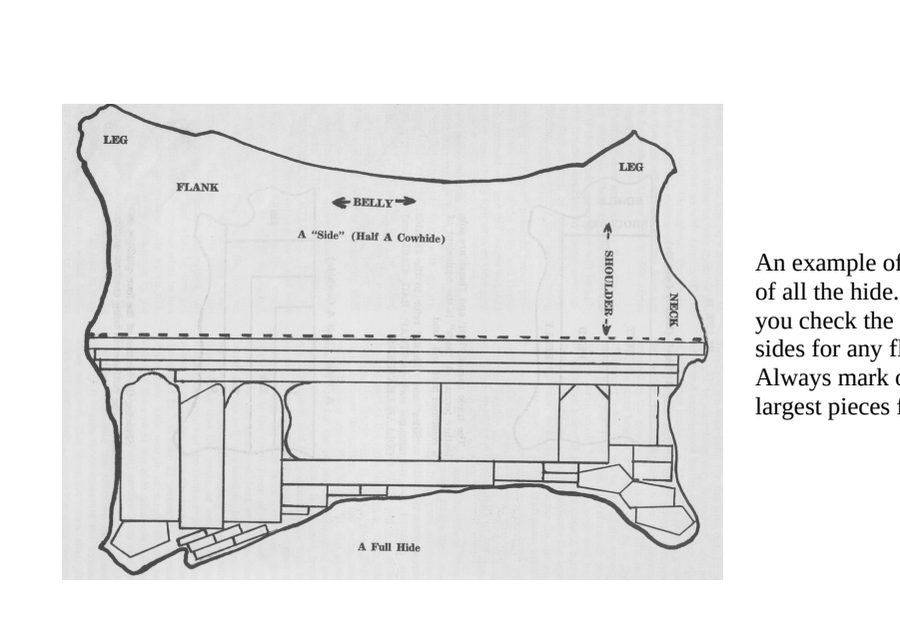
The first diagram shows how the hides are broken down into Sides, Backs, Bends, Butts, Shoulders and Bellies.
1st
The second diagram shows qualities of the leather with the Butt section being the first quality.
Page 4
4
An example of making good use of all the hide. Make sure that you check the leather on both sides for any flaws or cuts.
Always mark out the longest and largest pieces first.
Some Types of Leather
Suede: Suede is taken from the under-part of the skin. It has a distinctive feel to it that can seem somewhat hairy. Sometimes the nap from the suede is modified to become very fine. Suede is notorious for being quite difficult to clean, but is a popular choice for footwear, clothes and accessories.
Pigmented: Pigmented leather, taken from the name itself, has a light spray of color. The color is added during the last stage of leather making. A uniform appearance is taken by the leather once the color is included. This is type is primarily used to make shoes.
Full Grain: Full grain leather is taken from the top side of the tanned leather. The surface of the full grain leather is usually smooth to the touch.
Foiled: Foiled leather is the type of leather that can be seen in dancing shoes or belts. Usually the grain side of the leather is layered with colored and metallic foil. The materials are permanently fixed together, creating that dazzling metallic effect.
Aniline: This is one of the most popular types of leather. Known in the market as premium leather, the color taken from the dye is very minimal, giving the leather a "naked" look. The natural beauty of the leather shines through. Most aniline leather may have some "flaws," like small scratches and such, but these just add to the charm of this expensive leather.
Corrected Grain: Corrected grain leather has a glossy surface and appearance. The surface is smoothed and finish coating is applied. This may not be one of the most "high-end" types of leather available on the market, but corrected grain leather is prized for its durability.
Printed: Printed leather has designs on its surface. These designs are usually embossed onto the leather's surface. The good thing about this is that the durability of the leather is not lessened.
Page 5
@- TAPER BACK 1” WHEN 2 LOOPS ARE USED ADD 2.” ror? BELT LooPRs (= {Tel fe WAIST MEASURE
IMPORTANT AS MANY BUCKLES VARY IN
NGTH..-+ EXAMPLE BELOW.
a THIS DISTANCE IS INCLUDED IN WAIST MEASURE. THIS Is I PLEASE
CONSEQUENTLY...
THE BELT MUST G ER THAN BE LENGTHENED
REGULAR BELT BUCKLES FROM CENTER HOLE TOTIP.
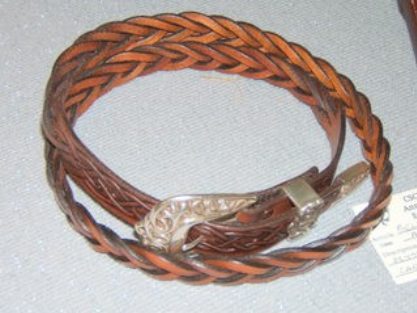
Examples of Belts from CSCL Members
Page 6
6
Let’s make a Leather Bag
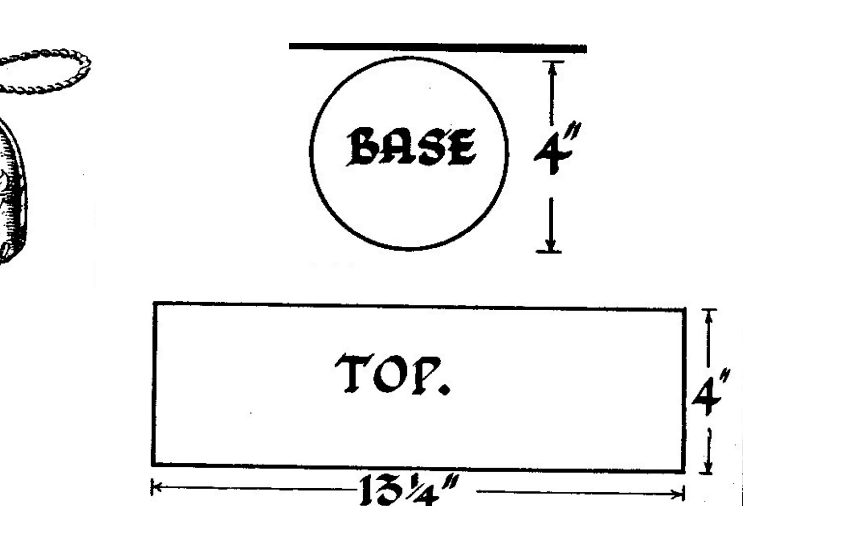
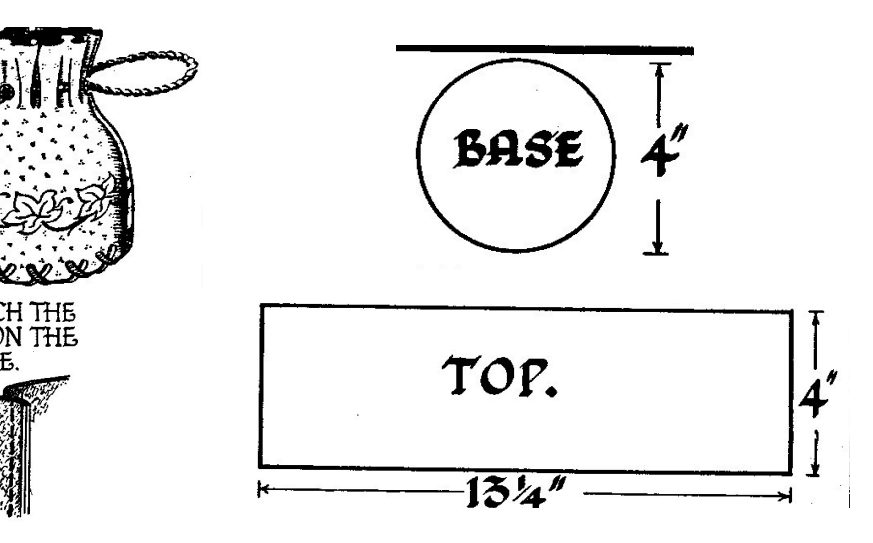
The dimensions given in the following illustrations can be changed depending on the size of the bag you wish to make. A paper pattern should be created first to ensure that all the pieces fit together correctly.
The dimensions given for the parts are for a small bag which could be used as a purse or a container for a compact, lipstick and other feminine beauty aids. If the pattern is enlarged, the pattern pieces should be carefully fitted together, to ensure that there are no inaccuracies before marking out and cutting the leather.
Suitable leather should be governed by the size of the bag. For a small bag, lining is optional, but should be included in a large bag. The only part stiffened is the base. The parts are stitched together, and the top is thonged to the bottom. There are no metal fasteners;
double eyelets are fitted at the top of the bag to prolong the life of the holes, which are subjected to a fair amount of strain from the operation of opening and closing. Depending on the type of leather used, decoration may be added using various methods.
Draw the outlines of the two shapes, on stout pattern paper, and cut the shapes out carefully.
Mark and cut out lining in skiver (note that the skiver lining should be cut slightly narrower than the outside leather which folds over at the top). Any decoration should be added round the bag before sticking the lining and outer leather together. Trace the lines of the design on the leather with a tracing tool, and work the decoration.
Page 7
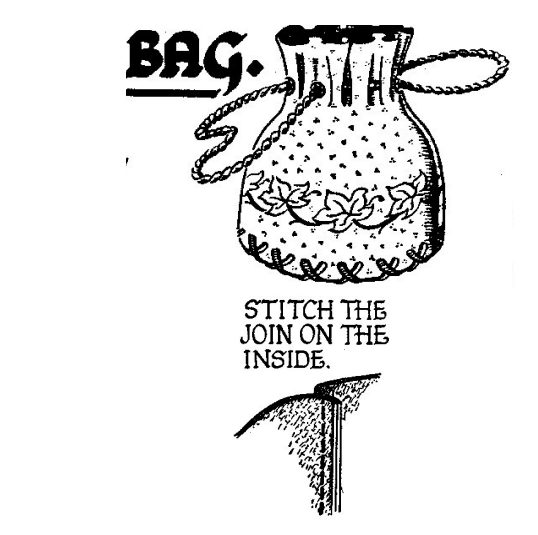
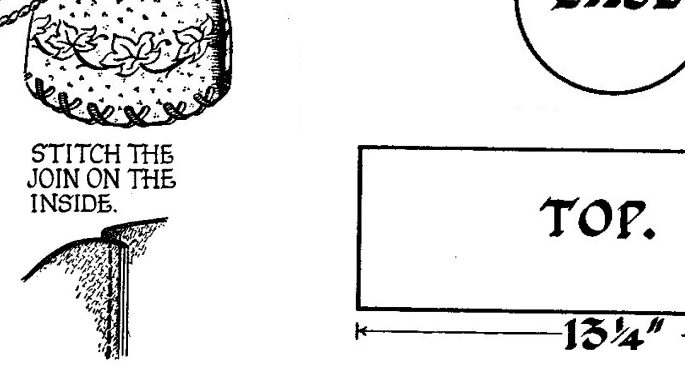
7 After adding the decoration, the lining should be stuck to the outer leather. Use glue for sticking the base parts of the bag together and paste for the body parts of the bag, and leave the upright joins unstuck for completion after stitching. Stitch the join together as illustrated. Turn the edges of the leather inside and glue them, then trim the skiver lining to overlap the seam on the inside. This should be done carefully, so as not to add bulk to the seam. The top edge of the body should be turned over the lining and glued to hold it, in place for stitching, which should be done after the glue has dried. After stitching, the double-ended eyelets should be fitted.
They should be spaced carefully, so that the bag closes evenly.
The next part of the work consists of punching the thonging holes which should be marked round the bottom of the bag and the lower edge of the body. The same number of holes should be punched in each of the joining edges. Fit the two parts together for thonging. This is best done by inserting the bottom of the bag inside the body, and forcing it down until it is correctly positioned; the parts should fit tightly together; tie through some of the holes to keep the parts together while thonging. The crossed whip stitch, is the best stitch for thonging the parts together and the thonging should be pulled fairly tight and the tension should be even.
Polish the bag inside and out, before fitting the drawstring.
Silk cord can be used for the drawstring, which also acts as handles for the bag. Work one end of the cord through the eyelets, threading inside and outside alternately until the starting point is reached, then thread the other end of the cord through the eyelets in the same way, working from the opposite direction. Tie the ends of the cord, and fray below the knot to make a tassel.
Open and close the back several times, guiding the tucks so that they form automatically when the bag is in use.
Did you pay your dues? It’s not too late -send you $25.00 fee (payable to CSCL) to – Tracey Howard RR#1 –2316 Conc Rd A Brecken, ON L0K 1B0
Page 8
8
The Magic of Leather by Lauren Mc Pherson
A Chair Affair attracted a lot of attention at White Oaks Mall, London, June 13-20, 2008.
Community Living London (CLL), a not-for-profit Association, held this unique fundraiser event to support various Community Living programs for people with intellectual disabilities, including accommodation (independent living and 24-hour home care), employment for about 200 people, respite care and day programs. Serving the community since 1952, their history, mission, future events and much more can be found at www.cll.on.ca.
In this, CLL’s 10th and final year of A Chair Affair, volunteers and about 60 artists responded to their April request in The London Free Press to donate chairs, tables, benches and to transform them into works of art. Corporations could buy CLL’s Muskoka chairs and either paint them as team projects or commission artists. The Forest City Decorative Artists group also participated each year. A live auction and entertainment followed the silent auction, raising approximately $40,000 annually.
Log on to www.achairaffair.com and click on “Artist Entries” to view the hundreds of donations, each with unique colour, theme, materials and construction. Lauren M c Pherson,
Page 9
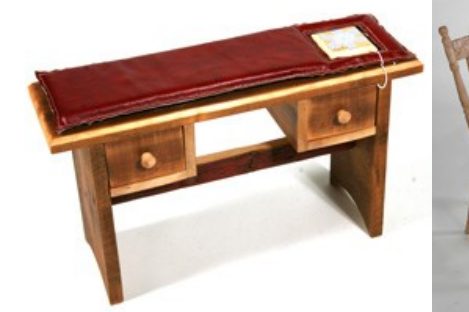
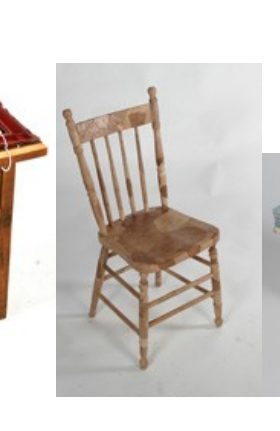
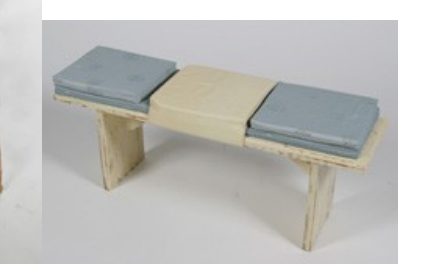
9 a multi-media artist, created seven chair art donations. In one 2005 piece she used leveling splits to leather maché an antique wooden chair. Two plank benches were given seat cushions: one in 2006 utilizing a roll of soft, yellow cowhide garment leather and another in 2007 incorporated a large piece of red upholstery leather. This year, however, she switched from leather and redesigned, and painted, an old dresser thus converting it into a spacious stereo cabinet.
That roll of yellow leather in 2006, custom patterned, saddle stitched, zippered to upholstery fabric and hooked underneath to its matching painted wooden bench, was bid on at auction ($85) and went to a new home across the ocean to London, England.
Who said that “Cows can’t fly.”