An issue of the Society’s newsletter, transcribed from the original. Download as PDF.
(8 pages, 2093 KB)
Page 1
The Canadian Society for Creative Leathercraft CANADIAN LEATHERCRAFT
Volume LXV No. 1
Fall 2016 0045-5121
Forgotten Tools of the Harness Trade
In this Edition…
Page 2 Notes from the Editor, Highlights of the past Executive Mtgs, Membership Info, CSCL Larmour Library Page 3 Workshops
Page 5 The Annual is coming – Awards to compete for.
Page 6 Forgotten Tools of the Harness Trade
©2016 Canadian Society for Creative Leathercraft All rights reserved. Reproduction in whole or in part without permission of the copyright holder is prohibited.
To contact any of our Executive please refer to the CONTACT section of our Website.
Website: www.canadianleathercraft.org
Facebook: “Leathercraft Friends” and “Canadian Society for Creative Leathercraft”
President: Jim Wilkes
Membership: Sheena Burger
1st Vice-Pres.: Lauch Harrison
Editor: Barbara Chynoweth
Past President: Rob Regan
Website: Kristi Cino
Treasurer: Della Chynoweth
Privacy Officer: Lauch Harrison
Secretary: Tracey Howard
Page 2
Note from the Editor.... Welcome to 2017. I hope everyone is enjoying all this snow that we are getting, a good time to stay inside and work on your leather projects.
We are always looking for articles and information to use in the Newsletter, please send them in.
At the October Meeting it was decided to post the Canadian Leathercraft Newsletter on our Website so this will be the last copy of the Newsletter that you will be receiving by email. Please check our Website for future editions.
The Quarterly Newsletter “Canadian Leathercraft” is your source of information about CSCL and its members. Also check out the CSCL website at www.canadianleathercraft.org and CSCL’s Facebook page.
Highlights from the Past Executive Council Meetings...
At the September meeting Hamilton reported that they meet the second and fourth Wed. of each month and were working on toolboxes, moulded bags and mugs, Mississauga was worked on braided bracelets and Norland was working on embossing. The Norland Guild also reported that they had demonstrated at the Kinmount Fair during Labour Day Weekend.
At the October meeting Hamilton is still working on their toolboxes, moulded bags and mugs, Mississauga finished bracelets and Norland finished up their embossed covered flask.
At the November meeting the Executive tried holding their meeting by Skype, Overall it worked well and we are going to look at holding our bad weather meetings in the winter this way.
CSCL Membership Have you paid your membership? It’s a new Membership Year (April 1 to March 31). Send your membership along with your cheque made out to “The Canadian Society for Creative Leathercraft” to our Membership Chair: Sheena Burger, 1085 Zion Rd, Little Britain, ON
| General Member | General Member – Student* | Member-at-Large | Sustaining Member |
|---|---|---|---|
| Individuals interested in leathercraft who belong to one of the CSCL Branches. (Need not be a leathercraft person.) $40.00 | A registered full-time student shall pay $5.00 | Individual interested in leathercraft who does not belong to one of the CSCL Branches. (Need not be a leathercraft person.) $40.00 | Commercial Organizations interested in supporting the Society. $100.00 or material equivalent to $100.00. |
; leathercraft who belong to ; shall pay $5.00 ; leathercraft who does not belong ; interested in supporting the
; one ofthe CSCL Branches. ; i tooneof the CSCL Branches. ; Society. $100.00 or material
; (Need not be a leathercraft i j (Need not be a leathercraft ; equivalent to $100.00. i-PEFSON.) $40.00 i cee see seein see eeeveerd POLSON.) $40:00
CSCL Larmour Lending Library
The CSCL lending Library of Books and Patterns can be referenced on our web site www.canadianleathercraft.org. Head to Gallery and click on CSCL Library of Books and Patterns. Under the Patter option there is 80 pages of patterns that may give you ideas of things to make. Under the Book section there is 13 pages of titles of Books and DVD’s about Leather crafting, design and colour. Remember these patterns and books are there for you to borrow from the library. Select item(s) you would like to borrow and send your list to Paul Kitchener at
Branch Presidents will assist in pickup and delivery of the orders from branch members.
Members-at-large may order directly from Paul and arrange shipping or printing options, fees may apply.
Page 3
Workshops
Leather Waxed Mug Workshop
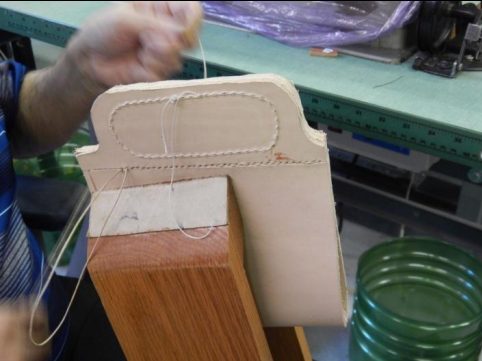
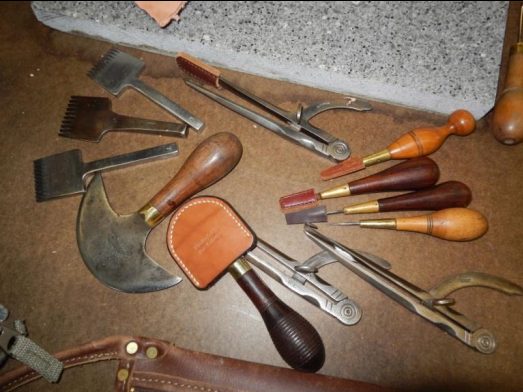
The workshop was held on Saturday, September 25th at Paul Kitchener’s Focused on Food location. 8 members of the SCSL spent the day assembling a wax mug, which involved a lot of hand stitching as you can see from the pictures below.
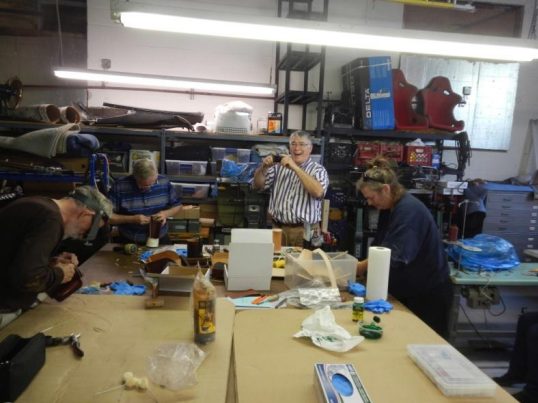
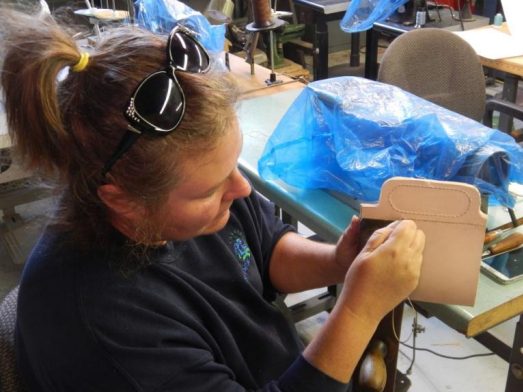
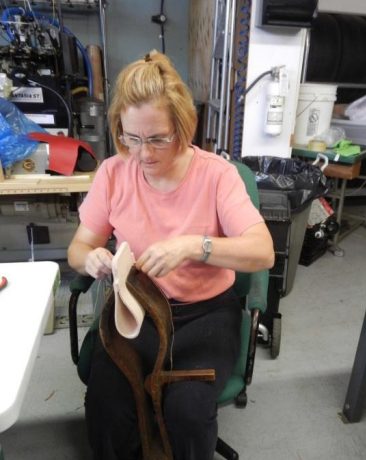
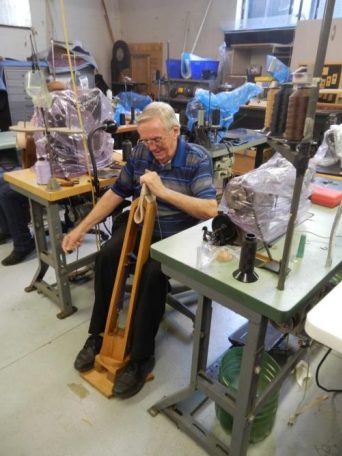
Page 4
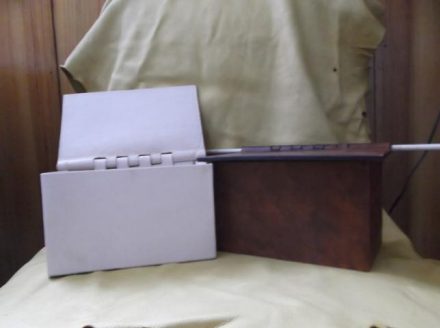
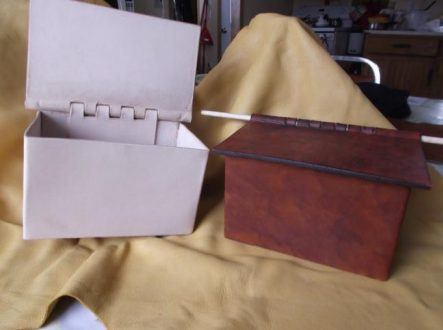
Hinged Boxes Workshop
The workshop was held on Saturday, November 19, 2016 at the Norland School Hall
Community Centre, 3448 Monck Road, Norland, Ontario were the Norland Branch meets. By the end of the day everyone had completed their boxes.
News from Norland
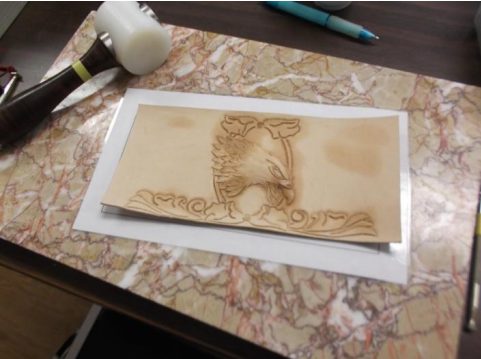
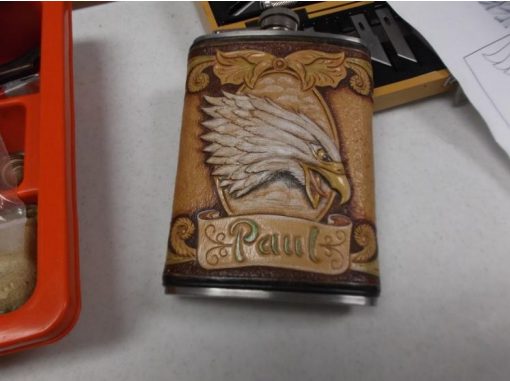
The Norland Branch was very happy to have Paul Kitchener come for a visit to show them how to do embossed leather. We worked on the project at our September and October meetings.
Below is a work in progress and the covered flask that Paul had done that was our goal for the finished item.
Page 5
The Hamilton Branch will be hosting the 2017 Annual Convention the first weekend of May.
Please mark this date on your calendar. More information will be coming shortly.
In this edition and the Winter Edition I am going to list the awards that you can compete for.
Please give the list a look over and see if there are any Awards that you would like to compete for.
CSCL Annual Awards
Award for Title Description outstanding Craftsman Ribbon Craftsman Ribbon is given at the Annual for articles displayed at the Annual craftsmanship Convention. The Fellows judge the pieces for outstanding craftsmanship. There is no monetary award for these awards. The pieces must have been made in the last year and not have been shown in any other Annual to qualify.
unique, original Salon Ribbon Salon Ribbon is given at the Annual for articles displayed at the Annual Convention.
or outstanding The Fellows judge the pieces at the Annual for their unique, original or outstanding idea or work idea or work. There is no monetary award for these awards. The pieces must have been made in the last year and not have been shown in any other Annual to qualify.
best molded Irva Ford Memorial This award is given for the best molded piece at the Annual if there is not a Biennial piece Award that year. The amount given for this award is $50.00 at the Annual or $100.00 at the Biennial and is paid from the Hamilton Guild Fund.
best tooling or Robert Muma For the best tooling or colour work awarded at the Annual.
colour work Memorial Award The amount given for this award is $50.00 and is paid from the CSCL General funds.
Best in Show Best in Show Awarded at the Annual meeting. This is selected by the Fellows.
The amount given for this award is $50.00 and is paid from the Draw fund. A Bronze Zalitis pin is also awarded.
Best General Best General Awarded at the Annual meeting. Requires a MINIMUM of 5 individual General Member Piece Member Piece members that have entered a piece of their work. The amount given for this award is $50.00 and is paid from the Draw fund.
Best Branch Best Branch This is voted on by the member’s at the Annual meeting. The amount given for this Display Display award is $50.00 and is paid from the Draw fund.
best piece of Workshop Award Awarded at the Annual General Meeting for the best piece of work resulting from a work resulting Al Foss Award CSCL Workshop by a General Member or Member-at-Large who is not a Fellow or from a CSCL Associate. The piece must be submitted at the closest Annual General Meeting after Workshop the CSCL Workshop took place. Requires a MINIMUM of 5 individual members that have entered a piece of their work. The amount given for this award is $50.00 and is paid from the Toronto Branch Al Foss fund.
Carving, molding, Weston Trophy Awarded at the Annual meeting. This is a branch award. The number of pieces is finishing, reviewed each year at the annual. It is judged prior to the Annual on a minimum of 4 colouring, lacing, pieces submitted by 4 members of a competing branch unless the number is whatever each changed. It is judged for all aspects of leather crafting. Carving, molding, finishing, piece entails colouring, lacing, whatever each piece entails. The critique is read at the annual during the general meeting and the Weston Trophy is presented to the winning branch. Each winning entrant receives a ribbon.
best design at the Ontario Crafts This is given for the best design at the Annual. This is selected by the Fellows. The Annual Council Award award is a one-year membership to the Ontario Crafts Council. The Application for OCC along with a picture of the winning article is sent in by the CSCL for the winning entry.
best piece by a Betty Heacock Is given at the Annual for the best piece by a new or novice member. This award was new or novice Memorial Award established by her family in 2005, in memory of Betty Heacock. In 2001 she received member an Ontario Volunteer Service Award for her 47 years of service with The Canadian Society for Creative Leathercraft. She was a vital contributing member of the former Barrie and Toronto Branch and then a Member-at-large. Betty, who served as Treasurer on the executive, demonstrated, competed and exhibited throughout the province. Her commitment to leathercrafting helped keep alive this heritage craft.
Page 6
In this edition we welcome an article from the Hamilton Guild, the next edition we will be welcoming input from the Mississauga Guild.
Forgotten Tools of the Harness Trade
Tools of the trade at the turn of the 20th century.
I will be doing a series of articles on hand tools used in the past two centuries. I will describe the tools and number them using the C S Osborne Catalogue No.51 circa 1905 – 1915. The photo plates are taken from this catalog I'll also use HF Osborne and Gomph Catalogues. The information I present is gleaned from books and through study and consultation with other tool users young and old.
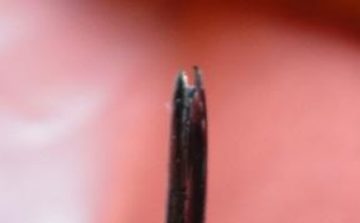
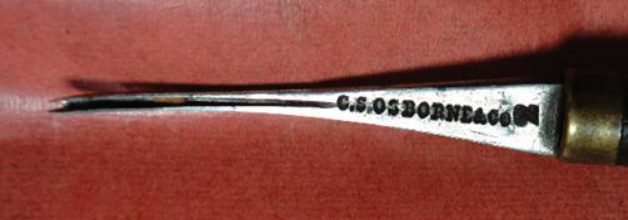
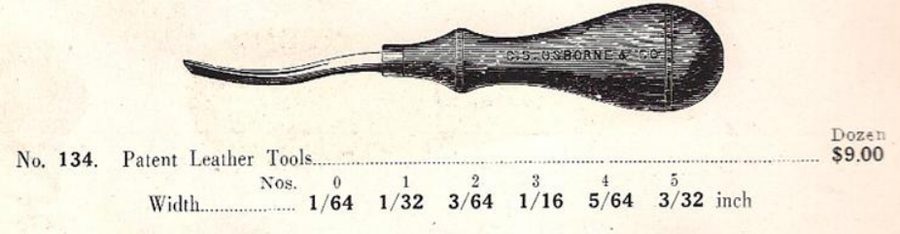
CSO No. 134. Patent Leather Tool. a.k.a Stitching Groover, Stitch Race, Freehand Scratch & Gum Tool.
This free hand groover is pushed forward cutting a trench as it goes. It was made to carve stitch channels in Patent Leather. Due to the hardened and shiny surface of the patent leather it was difficult to see the pricker marks, a channel cut down to a softer layer aided visibility. The harness stitching was protected being less exposed to chafing and wear.
This thin bladed tool has a U-shaped groove. Due the fineness of the tool there are very few files or stones that can be used to sharpen the inside of the groove, a tube made of fine sand paper or wrapping the sandpaper around a harness needle can be used. The tool can be sharpened and honed on the outside of the U.
The inside of the groove can be honed with a piece of string that has been rubbed with rouge or polishing compound.
Page 7
Mostly used on the grain side of the leather, but it can be used on the backside to cut fine channels.
The channel helps to guide the french edgers when relieving excess material allowing the leather to fold. It can be used to cut the tops off stitching, making disassembly easier, it can also be used to cut decorative designs in the top grain.
Look for rosewood and fruitwood handles, the ferrule should be tight and unsplit. Tool Makers to look for Gomph (3 lines on handle), CS Osbourne, HF Osborne, W.Dodd, J English & Others. Tool were made from 1820's til turn of the 20th century. Expect to pay $30 - $40 for unreburbished and $40 - $80 for a working tool. Some Makers are more collectable and tool prices can be higher.
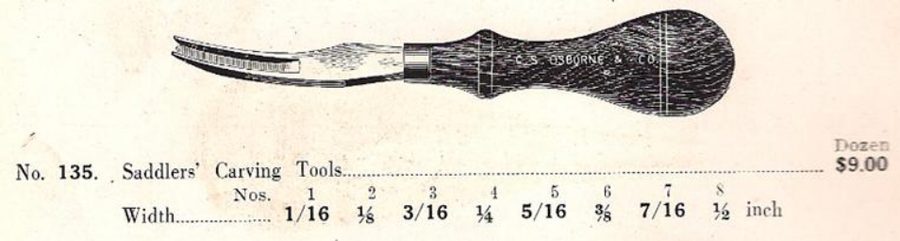
No. 135 Saddlers Carving Tool.
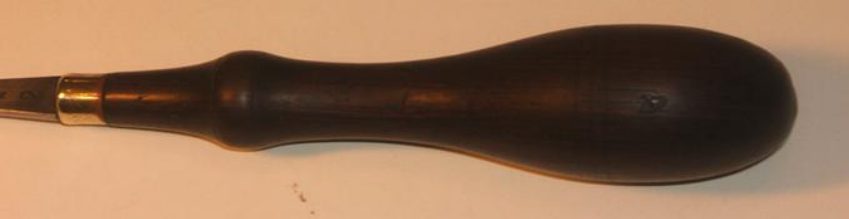
This free hand groover is pushed forward cutting a trench as it goes. It is generally used on the back of the hide. It has a larger width than the Gum Tool and is used extensively in box making. Able to create a deep even gouge, this tool is sharpened to allow it to cut only as deep as designed, the tool can not “dive” into the leather without a great deal of force. I have seen the 1/16th thru to 7/16”. The carving tool is ideal for removing material allowing folds. It also cuts to a set depth that gives the french edger an excellent control on removal of excess leather.
The width of the tool goes to ½ inch, Common sizes are 1/8” to 1/4” the tools are not numbered the dimension is given on the tool in fractions of an inch. Generally this tool shows up sharpened incorrectly.
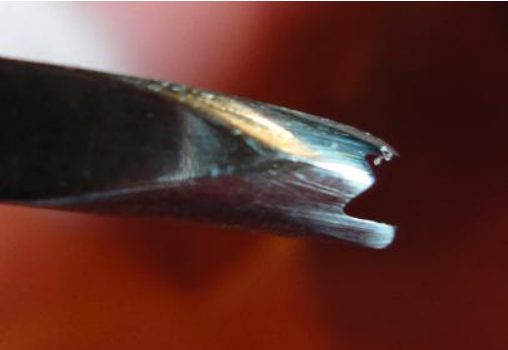
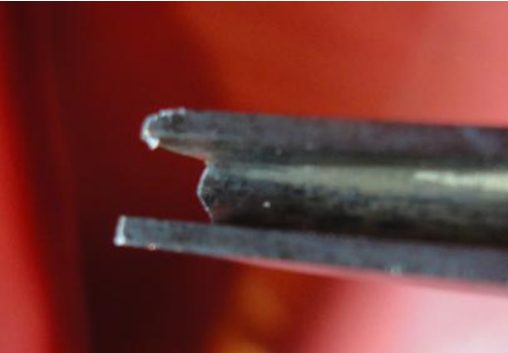
Notice the geometry of the working tool, this sharp angled point makes a very even round cut.
Look for Hardwood handles, occasionally this can be found with rosewood but it is later in the 19th Century and rosewood was being less used due to availability and cost. This tool was usually made by CS Osborne
Page 8
and HF Osborne. Expect to pay $40 to $65 for a working tool.
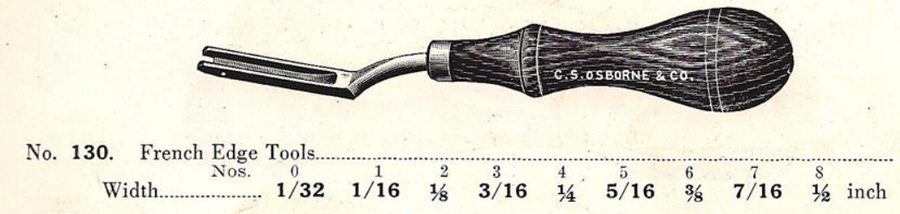
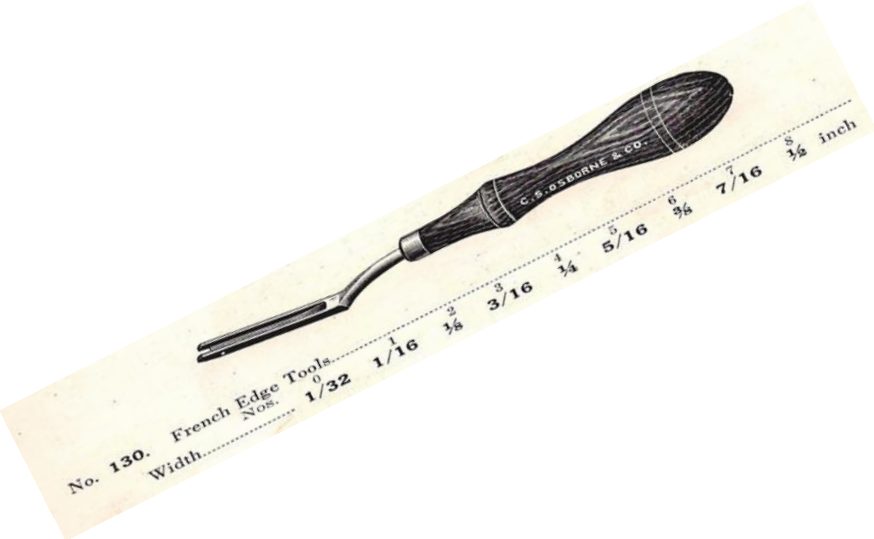
No. 130 French Edge Tool
This tool is pushed forward, the protected cutting edge is able to trim the high points without diving into the leather. By using the flat sole on this type of french edger, keeping it very close to the leather allows fewer mistakes and speeds skiving. The inside edge must be sharpened and honed. The outsole is flattened, then honed. This tool can remove leather on edge skives and thin leather in the midlands, when used with gouges, the leather can be taken off with precision.
The tools are numbered by the 16th's of an inch, so for example a number 6 is 6/16th of an inch. Due to it's usefulness many Makers made this tool, look for CSO, HFO and Gomph. The handles are made with hardwoods, and rosewood. Expect to pay $40 - $90 depending on size maker and condition.
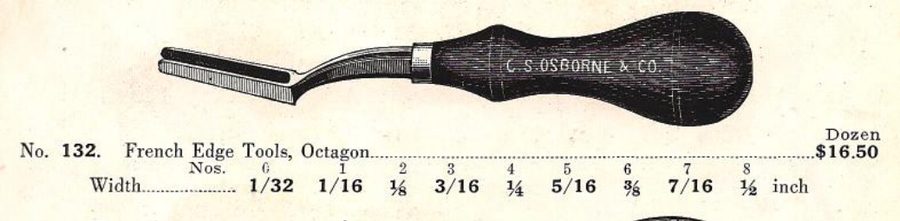
CSO No. 132 French Edger This tool is made with heavier Octagonal Stock, it was an up grade. The tools were made to last for generations of use, I have seen tools properly sharpened that are nearly full size after years of use.
Expect to pay slightly more for the No. 132 as it is more collectable, any where from $45 & up. Tools of the larger sizes fetch more money, rarity comes into play sizes 6,7, & 8 are seen less often.
There are some good resources for using and maintaining the tools, the paperback book Leathercraft Tools by Al Stohlman available from Tundra Leather or LeatherFactory is a great start. The book covers lots of tools and techniques, filled with Plates, Pictures and good descriptions.
More information on the Early Makers is available in Search for early New Jersey Tool Makers by Alexander Farnham and Early Tools of New Jersey and The Men Who Made Them by Alexander Farnham.
Farnham details the histories of C S Osborne and H F Osborne along with others. If you have questions about tools new or old please email or call and I will do my best get answers.
Thanks
Lauch Harrison A.C.S.C.L.
Hamilton Guild