

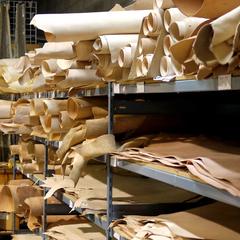


A society of leather crafters, 1950–2025
The Society, 1950–2025; its records, 1950–2026.
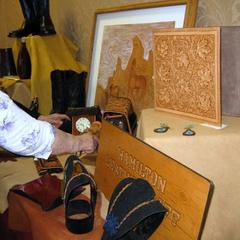
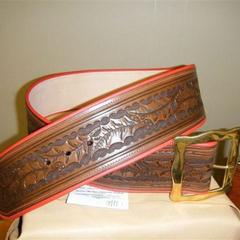
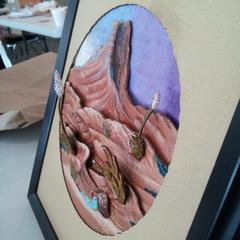
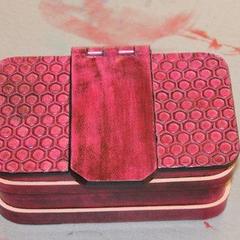
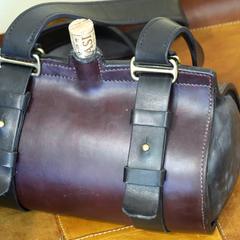
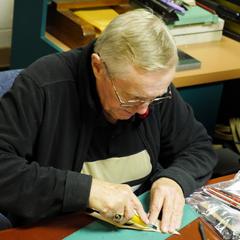
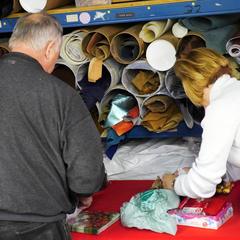
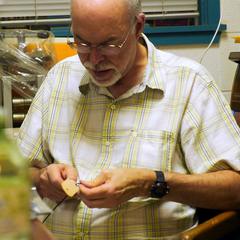
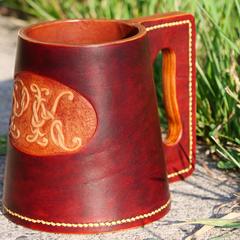
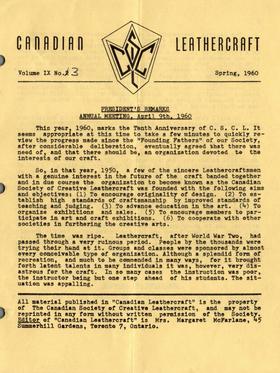
For seventy-five years the members of this Society tooled, moulded, carved and stitched leather, and every year they brought their best work to the Annual Meeting to be judged. It began in Toronto on 8 June 1950, with Deane Russell as first president and Robert Muma as first treasurer. Muma was a master bookbinder, and he went on to become the Society’s historian and the keeper of its archive.
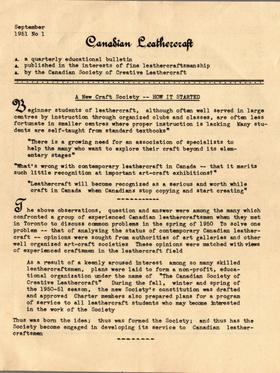
In September 1951 the members started a quarterly of their own, Canadian Leathercraft, and kept it going until the Society closed. Twelve branches carried the craft across Ontario. From 1954 to 1970 the Society also sent members’ pieces to the International Assembly of Leathercraftsmen, where the leathercraft guilds of Canada and the United States gathered to show their work.
On 10 May 2025 the members voted to dissolve the Society. Its last editor, with the caretakers who wound up its affairs, published one final issue, Fall 2026, to report the vote and the story of that last year.
This site is what survives: every issue, every photograph, the papers of every meeting, and the names of the people who made the work.
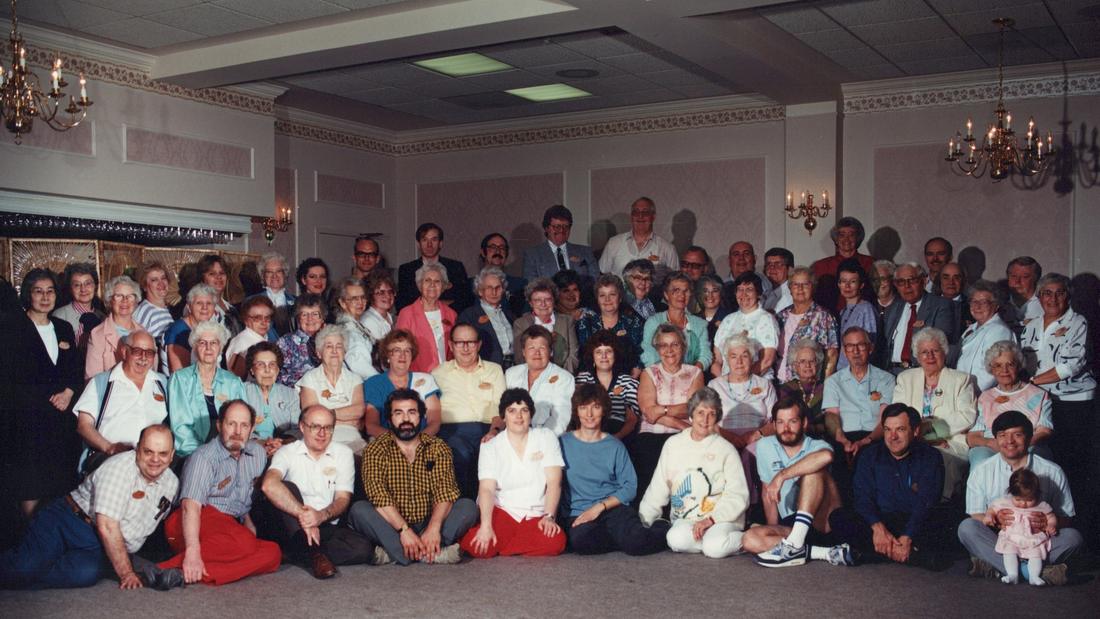
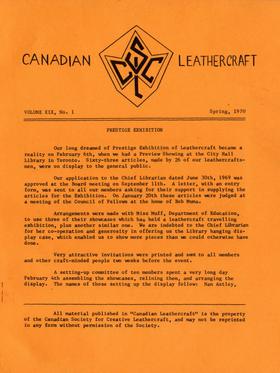
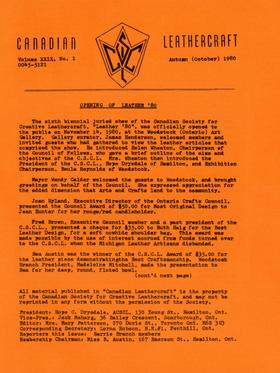
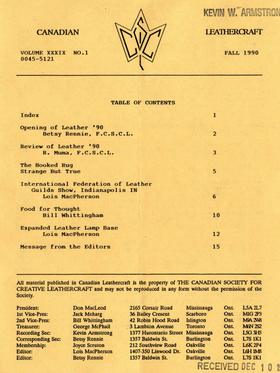
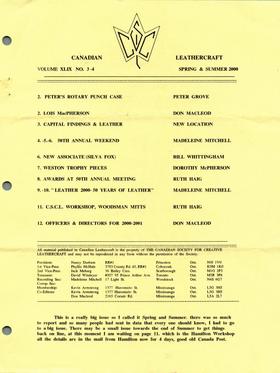
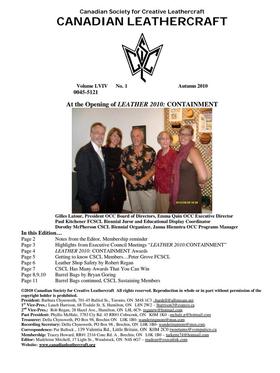
Six hundred and eighty-six people are named in these records: as officers, as prizewinners, as teachers, and in memoriam. These are the makers whose work the Society recorded most often, each with the number of records that name them.
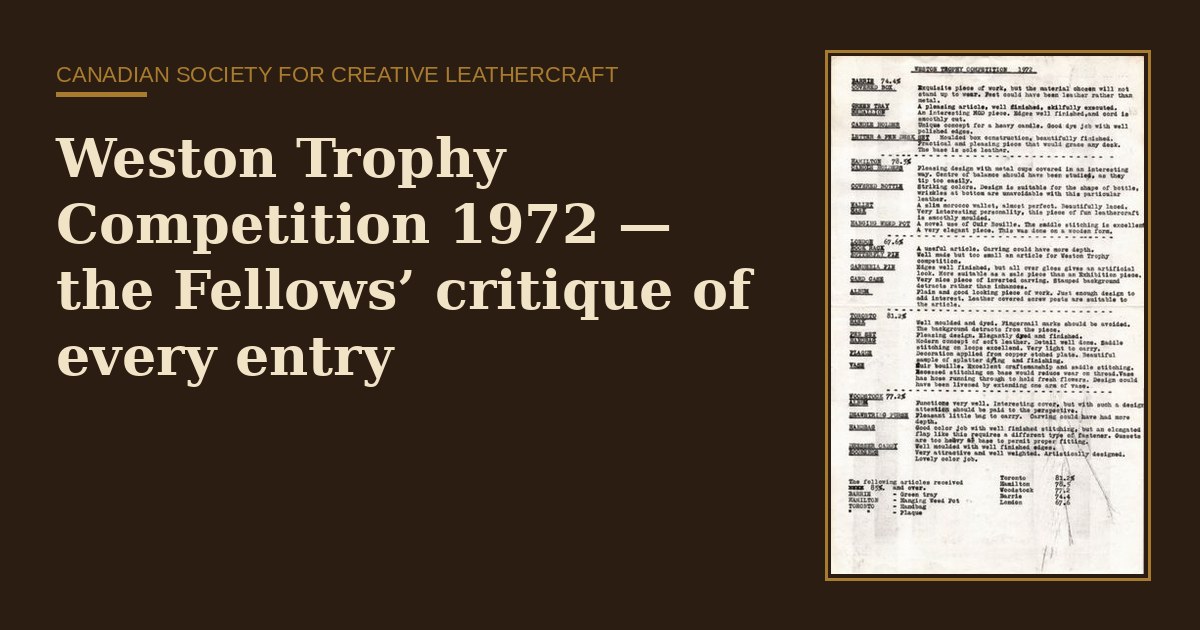
The Weston Trophy
When the Weston Leathercraft Guild disbanded in the early 1950s (the first leather guild in Canada under the Canadian Handicrafts Guild), the money left in its treasury passed to the Society. The Executive spent it on a trophy, so that the guild would be perpetuated by the organisation that grew out of it. The first Weston Trophy went to the London Branch in 1957.
Each year the Council of Fellows (the Society’s Fellows, its senior certified rank, and the final authority on the standards of the craft) wrote a critique of every entry, not only the winners. Those critiques survive here from 1972, 1978 and 2012, typed sheet by sheet, branch by branch (the 2012 judges signing their own comments by hand), carrying the marks, the reasoning, and the plain judgements that went with them.